
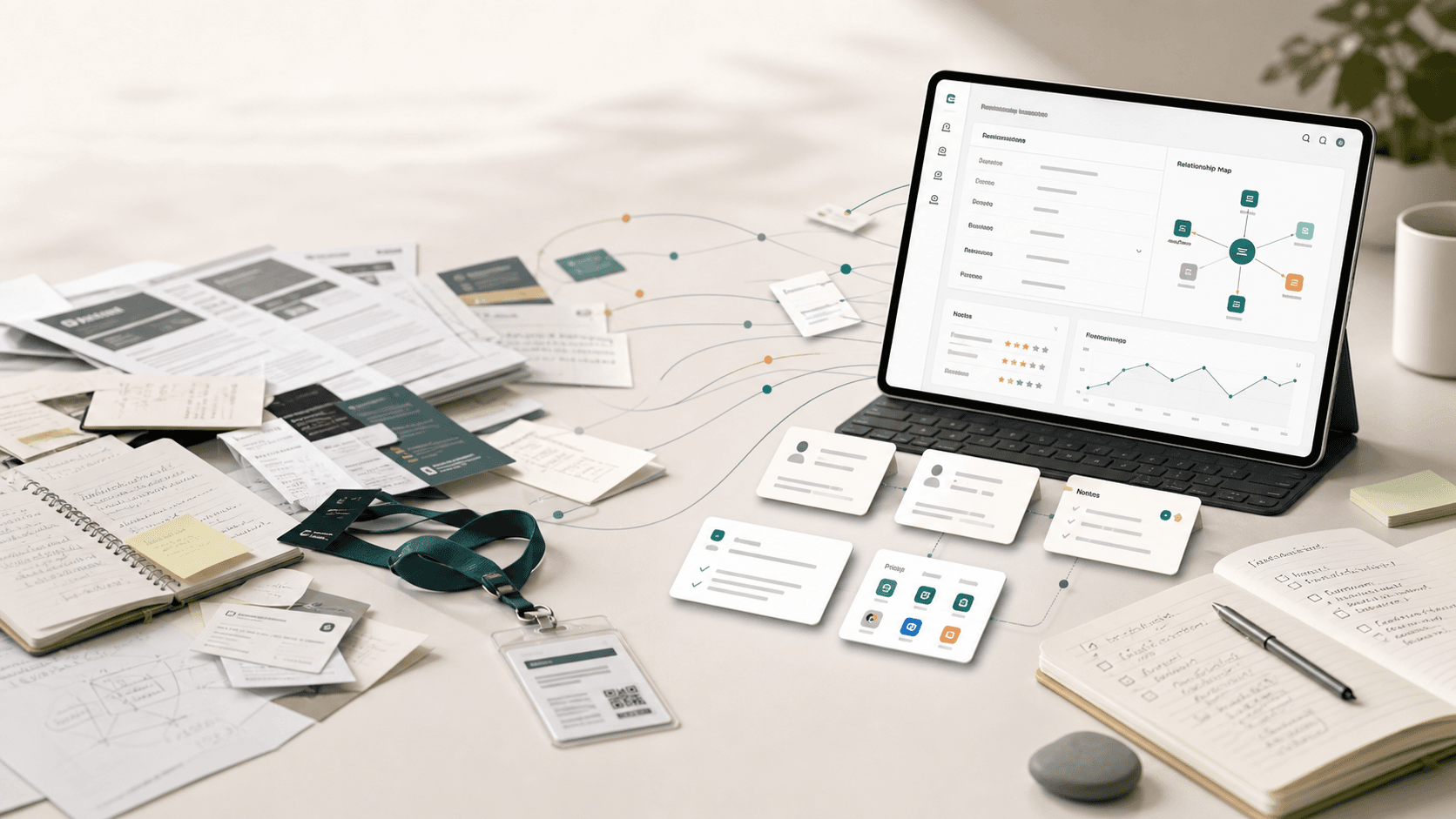
Compare software without losing the reason you chose.
StackTrack turns software evaluation into a private, structured record. Capture requirements, vendor conversations, pricing notes, integrations, stakeholder concerns, and final decisions so every shortlist has context when you come back to it.
Evaluate
Shortlists and criteria
Compare
Notes, vendors, pricing
Remember
Chosen and rejected tools
Evaluation trail
The search is easy. Remembering the reasoning is harder.
Teams usually have plenty of places to find software options. The problem starts after discovery: a few demos, a pricing call, a spreadsheet, a Slack thread, and suddenly the real decision context is scattered everywhere.
StackTrack keeps each software evaluation tied to the same record, so you can see the original requirement, the competing tools, the vendor contacts, the concerns, and the final reason a product moved forward or was rejected.
Peer context
Use public signals without giving up private judgment.
Anonymized community signals can help you spot common pros, cons, alternatives, integrations, and replacement patterns. They are useful inputs, especially when vendor pages only show the strongest version of the story.
Your actual evaluation still belongs to you. Private notes, stakeholder feedback, pricing context, security concerns, and internal project details stay separate from public software profiles.
Evaluation data
Everything that belongs beside the shortlist.
Criteria
Requirements, use cases, must-have features, nice-to-have features, risk areas, and stakeholder priorities.
Comparisons
Side-by-side notes about products, services, vendors, implementation fit, support quality, pricing, and integrations.
Contacts
Sales reps, technical contacts, event conversations, follow-up promises, and the people who supplied each answer.
Outcomes
Chosen, rejected, parked, replaced, or revisited decisions with a clear reason attached.
Buying memory
Built for the part after the demo ends.
When someone asks why a tool was rejected
Open the software evaluation record instead of searching old messages and meeting notes.
When a vendor comes back six months later
See the last quote, the original blocker, the contact, and the project that triggered the evaluation.
When a replacement search starts
Reuse the old context, compare new alternatives, and avoid repeating the same research from scratch.
Start free
Give the next software decision a memory.
Start with one tool you are evaluating now. Add the shortlist, criteria, vendor notes, and decision status. The record becomes the place your team returns to when the choice matters again.
Start your first evaluationExplore related StackTrack workflows